Accessible Bathroom Renovations
Stay in the Home
You Already Love.
Tub-to-shower conversions, walk-in showers and accessible bathrooms across Cobourg, Port Hope and Northumberland County. Fixed-price quotes from a builder with 25 years in the county.
25+
Years In The County
200+
Bathrooms Renovated
$3,000
Federal Tax Credit Available
4.8★
Google Rating
Aging In Place
Most people would rather stay
in their own home.
The bathroom is usually the first room that makes that difficult. A high-sided tub becomes something you have to climb into. A step into the shower becomes something you think about. Nothing has gone wrong exactly, but the room stops working the way it used to. Making one safer and easier to use is straightforward work, and it usually costs less and takes less time than people expect.
Funding
You may not be paying for all of it
Several programs help with the cost of accessibility work in Ontario. They are worth checking before you plan a budget, and we are happy to provide the quotes and documentation applications usually need.
$3,000
Home Accessibility Tax Credit
Federal. Claim 15 percent of up to $20,000 of eligible renovation costs, to a maximum credit of $3,000 per year. Available to homeowners 65 and over, and to people eligible for the Disability Tax Credit.
$15,000
Home and Vehicle Modification Program
Funded by the Ontario government, administered by March of Dimes Canada. Up to $15,000 lifetime toward home modifications for people with a substantial mobility disability. Income-tested, requires an occupational therapist assessment, and must be approved in writing before work begins.
$5,000
Renovate Northumberland
Delivered locally by Habitat for Humanity Northumberland, including a grant of up to $5,000 for accessibility upgrades. Access is by Expression of Interest rather than direct application, and Habitat contacts you from there.
MHRTC
Multigenerational Home Renovation Tax Credit
Federal. For building a self-contained secondary suite so a relative 65 or over, or an adult with a disability, can live with family. Relevant if the bathroom work is part of a larger in-law suite.
How It Works
From consult to completion
01
We Walk The Room
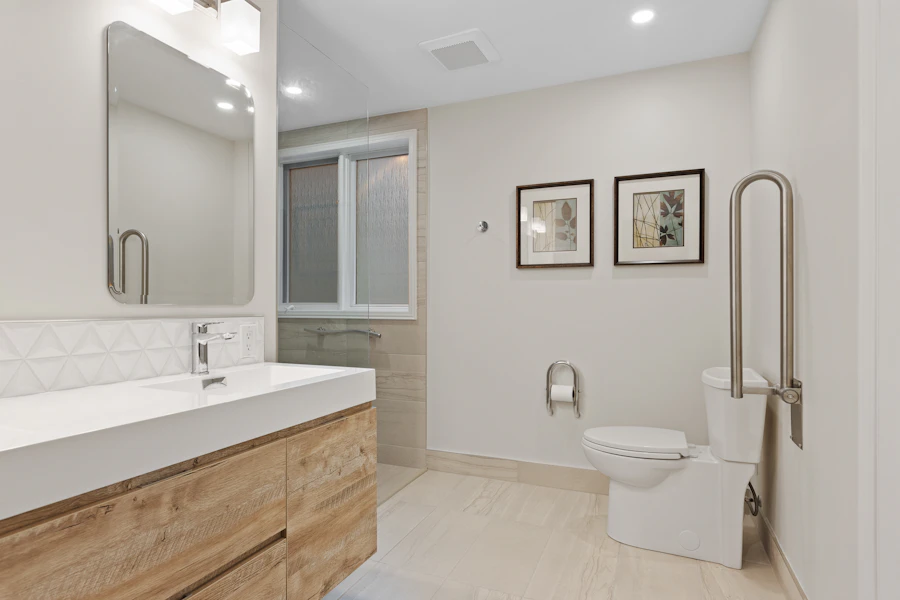
Where the grab bars go depends on the person, not on a standard. Getting in and out of the shower, standing up from the toilet, and steadying at the sink are the three points that matter most. We walk the room with you before anything is fixed in place.
02
Fixed Price, In Writing
The price we agree is the price you pay. If we find something behind a wall, we tell you before we touch it, not after. We can also supply the quotes and documentation that funding applications require.
03
Blocking Behind The Tile
A grab bar screwed into drywall will pull out the first time someone puts real weight on it, which is exactly the moment it matters. When we open a wall we install proper blocking, so bars can be fitted where they are actually needed and will hold.
04
Waterproofed Properly
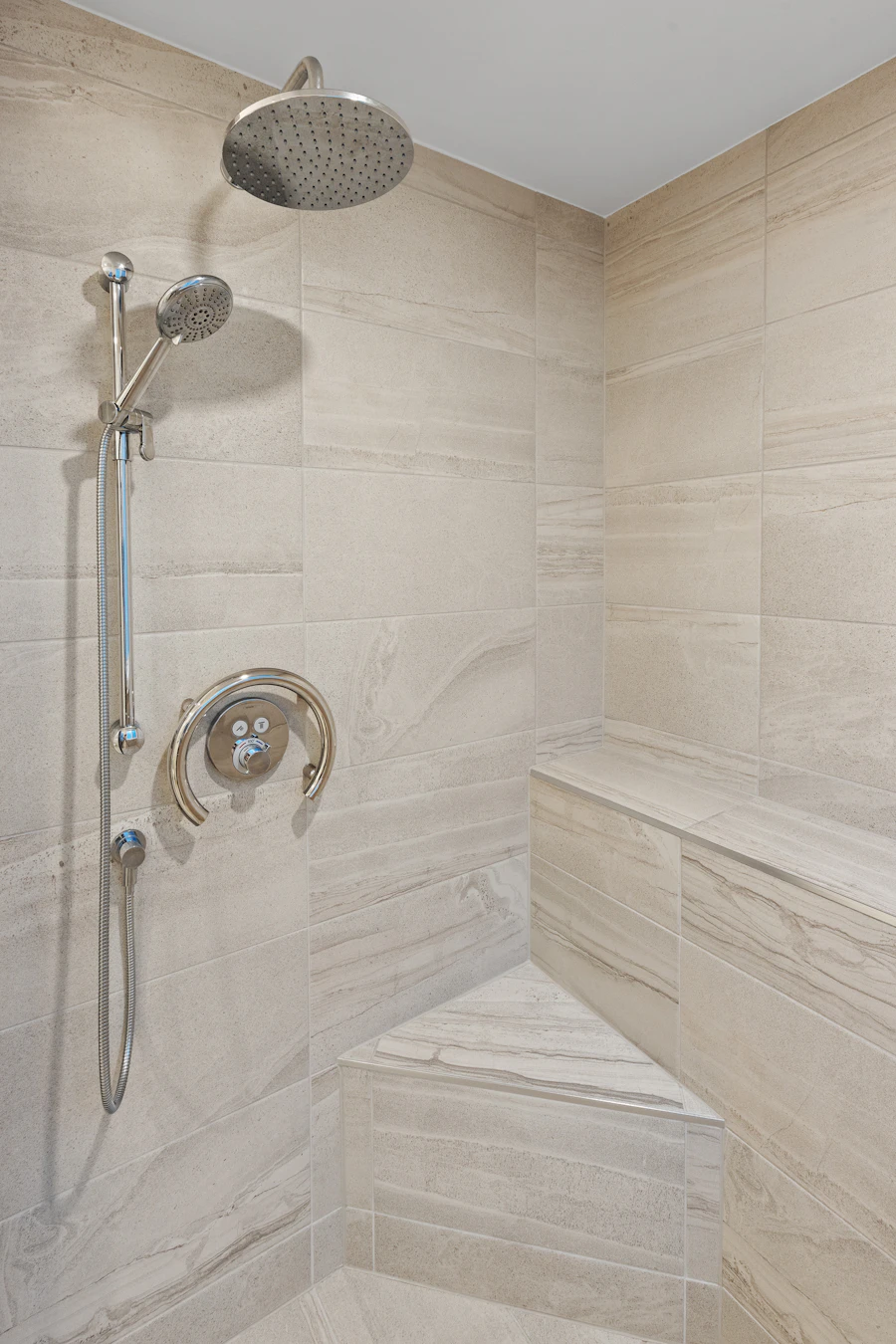
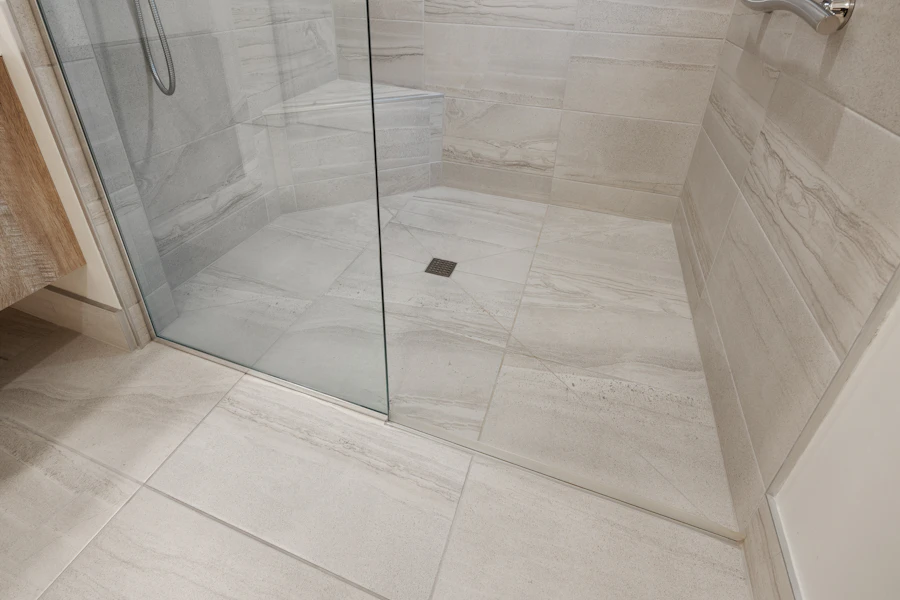
A curbless shower is the best option for a walker or wheelchair, and it looks clean and modern rather than medical. It is also more involved, because the floor has to slope correctly and the waterproofing has to be right. Done properly it is completely reliable.
Est. 1999
Family-Owned
Why Cobourg Construction
We build the room properly. We do not sell a bath insert.
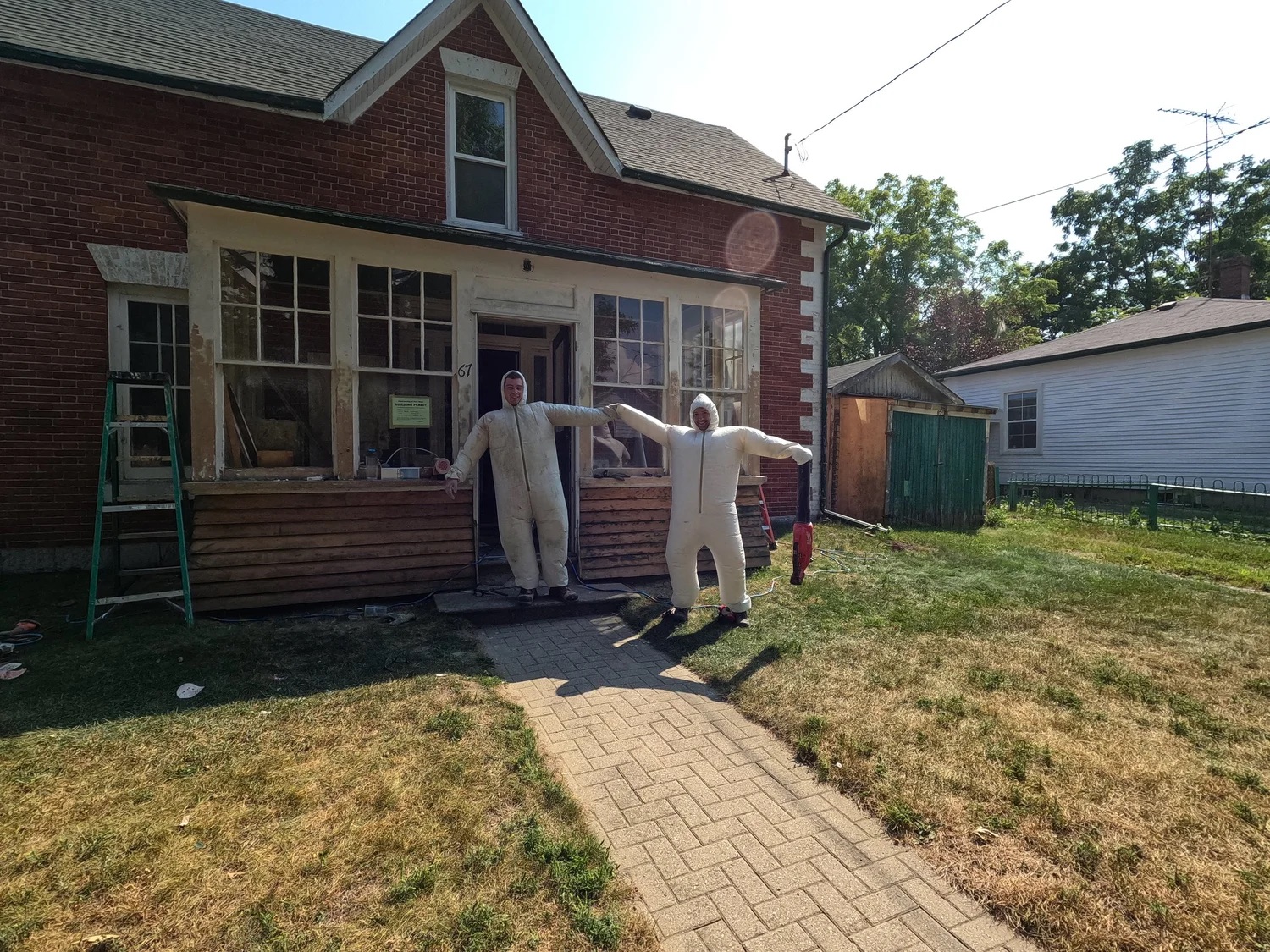
Twenty-five years building and renovating in Northumberland County. We are not a franchise selling one product, and we do not do a two-day insert over the top of your existing tub.
Most of this work is easier, cheaper and less disruptive when it is planned rather than urgent. Renovating after a fall or a hospital stay means working to someone else’s timeline. Renovating before means choosing the finishes, taking the time to get it right, and having the room ready when it is needed.
Frequently Asked Questions
Can you convert a bathtub into a walk-in shower?
Yes, and it is the most common request we get. We remove the existing tub and build a proper walk-in shower in the same footprint. In most homes the drain and water supply are already where a shower needs them, so the work stays inside the existing bathroom and does not spread into the rest of the house.
Can you convert a tub to a shower without moving the plumbing?
Usually, yes. Most bathrooms already have the drain and supply where a shower needs them. Moving plumbing adds cost and time, and we will tell you at the quote stage whether it is necessary.
What is the difference between a curbless and a low-threshold shower?
A curbless shower has no lip at all, so the floor runs continuously into the shower, which is what a wheelchair or walker needs. A low-threshold shower has a small lip, usually under two inches, which is much easier to step over than a tub but not fully barrier-free. Curbless requires more work on the floor slope and the waterproofing.
Where should grab bars be installed?
The three points that matter most are entering and leaving the shower, standing up from the toilet, and steadying at the sink. Exact heights and angles depend on the person’s height and which side they favour, so we position them with you rather than to a standard.
Can grab bars be added to a bathroom that is already finished?
Yes, though it depends what is behind the wall. If we can fix into studs, the bar will be solid. If not, heavy-duty anchors rated for the load can work. Proper blocking installed during a renovation is always stronger, which is why it is worth adding even if bars are not going in yet.
Is there funding available for accessible bathroom renovations in Ontario?
Yes. The federal Home Accessibility Tax Credit covers 15 percent of up to $20,000 in eligible costs for homeowners 65 and over. The Home and Vehicle Modification Program, funded by the Ontario government and run by March of Dimes Canada, provides up to $15,000 lifetime for people with a substantial mobility disability. Locally, Renovate Northumberland includes a grant of up to $5,000 for accessibility upgrades through Habitat for Humanity Northumberland. We can supply the quotes and documentation these applications require.
Will an accessible bathroom look like a hospital?
No. Grab bars now come in the same finishes as taps and towel rails, curbless showers look contemporary rather than clinical, and comfort-height toilets look like any other toilet. Done well, the room simply looks like a good bathroom that happens to be easy to use.
How much space does a bathroom need for a wheelchair?
As a general guide, a wheelchair needs a clear turning circle of about five feet and a doorway of at least 32 inches clear width. Not every bathroom can achieve that without moving walls. We can tell you what is possible in your room, and what a smaller adjustment would still achieve.
Do I need a building permit for a bathroom renovation in Cobourg?
Replacing fixtures in the same locations generally does not require a permit. Moving plumbing, altering walls or changing the structure usually does. We handle permits where they are needed and confirm what applies before work starts.
Should I renovate before I need it or wait until I do?
Before, if you have the choice. Planned work is cheaper, less disruptive and gives you time to choose finishes. Work done urgently after a fall or a hospital discharge is more expensive, more stressful, and usually has to compromise. Adding blocking and a low-threshold shower during a renovation you were going to do anyway costs very little extra.
Do you work outside Cobourg?
Yes. We work across Northumberland County including Port Hope, Baltimore, Grafton, Colborne and Brighton, and into Clarington, Trenton and Peterborough.
Ready when you are.
Tell us about the bathroom and who needs to use it. We will give you a straight answer on what is possible and what it costs.